
How does PDCE work?
PDCE uses a two-electrode structure based on a capacitor principle:
- The lower electrode connects to earth and collects charges induced in the ground.
- The upper electrode is separated by a dielectric, preventing those charges from moving directly upward.
- The upper electrode's rounded geometry reduces the electric-field concentration and corona effect associated with sharp points.
According to the manufacturer, this arrangement makes upward discharge development more difficult. It aims to reduce the likelihood that a descending leader will connect within the protected area.
Why earthing matters: PDCE uses earth as a reference potential. The potential-difference control principle depends on that connection.
Direct-strike contingency: If struck directly, the metal assembly is intended to convey the current to earth like an air terminal.
Key features
- No electronic circuit or power supply is required, so the product does not generate radio interference.
- It can be mounted on an existing mast and connected to the earthing system after a site assessment.
- Theoretical suppression areas published by the manufacturer vary by model and installation. They are not protection radii under TS EN 62305; the design protection zone is calculated separately.
- Stainless steel construction has low routine maintenance needs, but annual visual checks and checks of earthing resistance and connection continuity are recommended.
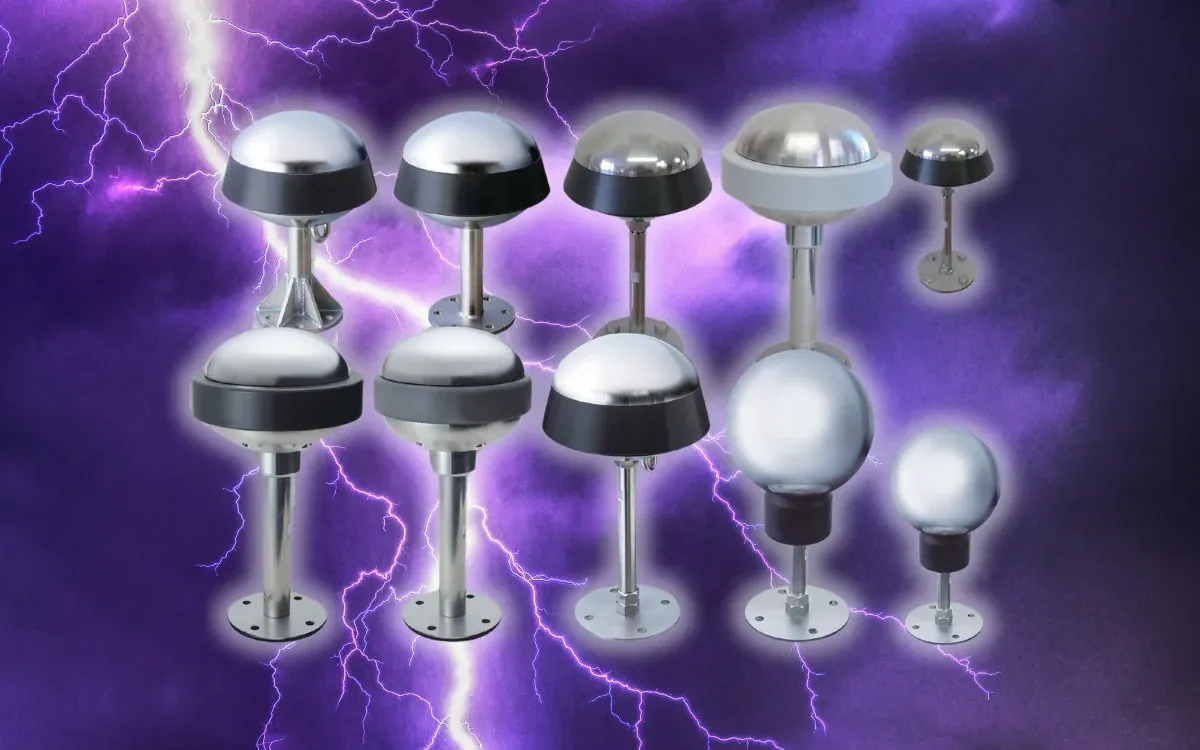
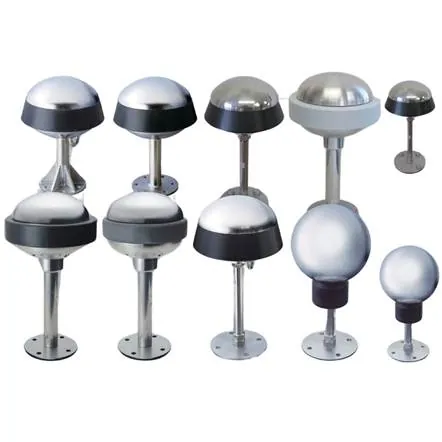
Models
| Model | Application | Note |
|---|---|---|
| PDCE-Magnum | Critical facilities and large areas | SUS316L electrodes; HT300/HT500 chimney options |
| PDCE-Junior | Smaller sites | SUS304 electrodes |
| PDCE-Marine | Ships and offshore platforms | SUS316L electrodes; vibration-resistant model |
| PDCE-Baby | CCTV poles and small equipment | Compact design for local applications |
For an external lightning protection design under TS EN 62305-3, the protection zone is determined using the air terminal's physical height, not the manufacturer's theoretical suppression area.
Where is it used?
Potential applications include energy sites, substations, industrial and petrochemical plants, transport and port facilities, communications infrastructure, public facilities and heritage structures. The protection design is assessed for each site.
Standards and evidence
The manufacturer states that PDCE conforms to JIS A 4201 and JIS Z 9290-3 and can be used as an air terminal under Japanese building rules. It also reports recognition as a recommended disaster-prevention product in Japan and use at more than 4,000 Japanese locations.
PDCE's claimed suppression effect is not a protection method defined by TS EN 62305. When used as a metal air terminal in a TS EN 62305-3 design, its physical height determines the protection zone by the protection-angle or rolling-sphere method. Down conductors, earthing, equipotential bonding, separation distance and suitable components must also be designed.
Part of layered protection
PDCE does not protect electrical equipment from surges arriving through the supply or nearby networks. A design may therefore also include SPD protection, earthing monitoring and lightning early warning, according to the site's risks.
Frequently asked questions
Is PDCE the same as an early streamer emission (ESE) air terminal?
No. ESE devices are designed to intercept lightning; PDCE is intended to inhibit strike formation in the protected area.
Can it replace an existing air terminal?
It may be mounted on an existing mast and connected to the same earthing system. The protection zone must still be calculated using physical height under TS EN 62305, so a reduction in air terminal count cannot be assumed. Suitability is assessed on site.
Does it need maintenance?
It has no electronic circuit, but annual visual checks plus earthing resistance and connection continuity measurements are recommended.